



Key Takeaways:
- Page count narrows the choice first. Saddle stitch suits thin booklets, while perfect binding, coil, and hardcover handle hundreds of pages.
- Coil, Wire-O, and comb binding lie completely flat, which matters for workbooks, cookbooks, and manuals used hands free.
- Hardcover case binding is the most durable option, and sewn bindings are the archival choice for books meant to last generations.
- Comb binding is the only common method you can reopen to add or remove pages without damaging the spine.
Table of Contents
- What Are the Main Book Binding Types?
- How Do You Choose the Right Binding for Your Project?
- Saddle Stitch vs Perfect Binding: Which Should You Choose?
- Coil vs Wire-O vs Comb Binding: What Is the Difference?
- What Is Book Pinning?
- Frequently Asked Questions About Book Binding
- Find a Book Binding Service in San Diego
The Main Book Binding Types Explained, From Saddle Stitch to Hardcover, and How to Pick the Right One for Your Next Print Project
Book binding is the finishing step that fastens printed pages into a single volume and attaches a cover. The method you choose decides three things: how many pages the book holds, whether it opens flat, and how long it survives handling.
This guide compares the common book binding types side by side, walks through a simple decision process, and answers the questions people ask most before placing an order.
What Are the Main Book Binding Types?
The main book binding types used in commercial printing are saddle stitch, perfect binding, coil, Wire-O, comb, case binding, and sewn binding. They differ in page capacity, whether the book opens flat, and how long it survives use, so each suits a different kind of project.
| Binding type | Practical capacity | Lies flat | Best suited to |
| Saddle stitch | 8 to about 64 pages, in multiples of 4 | No | Programs, booklets, magazines |
| Perfect binding | About 28 pages up to several hundred | No, unless PUR glue | Paperbacks, catalogs, annual reports |
| Coil (spiral) | Up to about 400 sheets | Yes, rotates 360 degrees | Workbooks, manuals, cookbooks |
| Wire-O | About 20 to 200 pages | Yes, rotates 360 degrees | Proposals, calendars, planners |
| Comb | Up to about 425 sheets | Yes | Internal reports, editable documents |
| Case binding (hardcover) | About 30 to 400 pages | Depends on construction | Yearbooks, memoirs, gift books |
| Smyth sewn | Varies with signatures | Opens well | Archival and heirloom books |
| Screw post | Depends on post length | No | Portfolios, swatch books, look books |
Treat the capacity figures as working ranges rather than hard limits. Paper thickness changes the math, so a 200 page book on thin text stock binds differently than the same count on heavy coated paper. Punch-and-bind methods are measured in sheets, and each sheet carries two pages.
How Do You Choose the Right Binding for Your Project?
Choose binding by working through page count first, then lay-flat needs, handling, and budget. Page count narrows the field because several methods only work inside a set range, and most projects end up with two or three workable options rather than one.
Work through these questions in order:
- Count your pages. Under 64 pages opens saddle stitch; above that, move to perfect, coil, or case binding.
- Decide whether it must lie flat. Anything used hands free, such as a cookbook or training workbook, needs coil, Wire-O, or comb.
- Estimate how hard it will be handled. Daily-use manuals favor coil or hardcover, while a one-time event booklet does fine stapled.
- Ask whether pages will change. Comb binding reopens for updates; glued and stitched books cannot be edited.
- Check whether you need a printed spine. Perfect and case binding give a titled spine for shelving; wire and coil do not.
- Match the method to quantity. Short runs favor saddle stitch, coil, and Wire-O, while perfect binding grows more efficient as volume rises.
That last point comes straight from production economics. Perfect binding is possible at very low quantities but less cost-effective there, and it becomes very efficient once a run passes a few hundred copies.
People usually come in asking for a specific binding, and half the time the right answer is a different one. A training binder that gets updated every quarter should not be glued, and a family memoir meant for grandchildren should not be spiral bound. Tell us how the book will be used and the binding usually picks itself.
The print team at Replica San Diego Digital Print & Copy
Which Binding Lies Flat?
Coil, Wire-O, and comb bindings lie completely flat, and coil and Wire-O let pages rotate a full 360 degrees. PUR perfect binding also opens flat without cracking the spine, which makes it the choice when you want a printed square spine and flat-opening pages together.
Standard perfect binding and saddle stitch do not lie flat. A reader has to hold them open, which is fine for a program or novel but frustrating for a lab manual or recipe book.
Saddle Stitch vs Perfect Binding: Which Should You Choose?
Saddle stitch is faster and cheaper for thin booklets, while perfect binding looks more finished and handles higher page counts. Perfect binding starts at around 28 pages and produces a flat printed spine, so the crossover usually falls somewhere between 28 and 64 pages.
| Factor | Saddle stitch | Perfect binding |
| How it is built | Folded sheets stapled through the spine | Pages glued into a wraparound cover |
| Page range | 8 to about 64, multiples of 4 | About 28 to several hundred |
| Spine | Folded edge, no printable spine | Flat spine that can carry a title |
| Lies flat | No | No, unless PUR adhesive is used |
| Cost on short runs | Lowest of any method | Higher setup per copy |
| Best for | Programs, newsletters, zines | Paperbacks, catalogs, reports |
The verdict: pick saddle stitch when the piece is thin, short-lived, or budget driven. Pick perfect binding when the book will sit on a shelf, needs a titled spine, or simply has too many pages to staple cleanly.
Coil vs Wire-O vs Comb Binding: What Is the Difference?
Coil, Wire-O, and comb are the three punch-and-bind methods, and all three lie flat. Coil is more durable for heavy daily use, Wire-O looks more polished, and comb is the only one whose spine reopens and recloses without damage. Appearance, durability, and editability decide between them.
- Coil: flexible plastic spiral that springs back when crushed, suited to workbooks carried in bags.
- Wire-O: metal double loop with a crisp, professional finish, though it can bend out of shape if stored poorly.
- Comb: plastic spine that opens for adding or removing pages, with the highest capacity of the three.
One limitation applies to wire in particular. There is nowhere on a wire-bound spine to print a book title, although wrapping the document in a printed cover solves that for shelving.
What Is Book Pinning?
Book pinning refers to fastening pages together with a pin or post driven through the stack, an old method for holding loose leaves or pamphlets. Modern print shops rarely use literal pins, and most people searching the term are looking for simple book binding or a removable post binding.
The practice has real history. Book conservator Jeff Peachey documented a 32 page pamphlet printed in 1858 held together with a single pin, noting that pins are easier to reverse than staples, although both are prone to rust.
The closest modern equivalent is screw post binding, sometimes called Chicago screw binding. A two-part metal post passes through punched holes and screws shut, so pages can be added, removed, or reordered, which suits portfolios, swatch books, and sample binders.
Frequently Asked Questions About Book Binding
What Is the Most Durable Type of Book Binding?
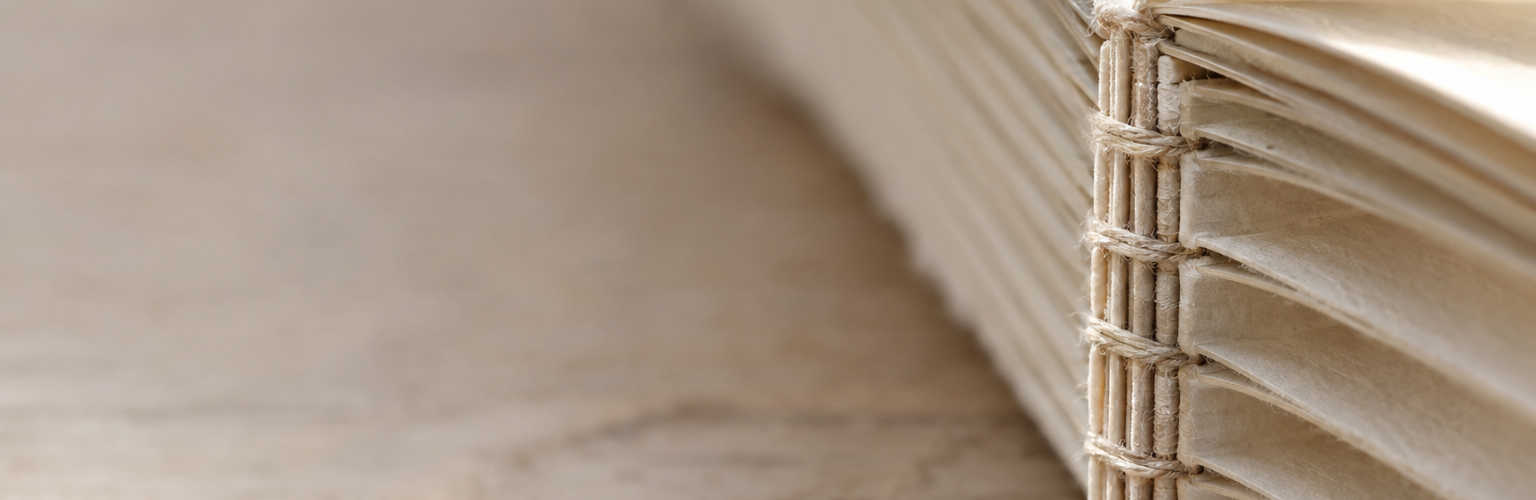
Hardcover case binding is the most durable option, because the rigid case protects pages from bending and the spine from wear. For books meant to last generations, Smyth sewn construction adds strength, since the pages are sewn in signatures rather than relying on glue alone.
What Is the Cheapest Way to Bind a Book?
Saddle stitch is the cheapest method for booklets under about 64 pages. For thicker documents in small quantities, coil and comb binding are the budget choices, since they need no special setup. Perfect binding becomes cost competitive once the run reaches a few hundred copies.
Can You Bind Just One Copy of a Book?
Yes. Digital printing makes single copies practical, and coil, comb, Wire-O, and perfect binding all work at a quantity of one. Theses, family memoirs, cookbooks, and manuscript proofs are common one-off projects. Ask your printer about turnaround, since specialty covers take longer than punch-and-bind options.
What Binding Is Best for a Thesis or Dissertation?
Check your university’s requirements first, since many schools now accept electronic submission and set their own formatting rules. For personal or committee copies, perfect binding or hardcover gives a finished, shelf-ready result, while coil binding suits working drafts that reviewers need to annotate flat on a desk.
Find a Book Binding Service in San Diego
The right binding is easier to choose with samples in hand. At Replica San Diego Digital Print & Copy, our book binding service starts with how your book will be used, and our team will walk you through the binding options that fit your page count, budget, and deadline.
Whether you need training manuals, a short run of booklets, or a single bound copy, contact Replica San Diego today for book binding in San Diego and get a quote.
